“For everything there is a season, and to every time a purpose under heaven.” I know that it is probably blasphemy for a marketing person to quote scripture when referring to marketing since most would proclaim that marketing is quite possibly the best of untruths and fake news.
However, thanks to good marketing, much success has been found over the years sharing good messages and shifting consumer behavior. I’d like to believe that The Great American Smoke-Out helped raise awareness of the risks of smoking and decrease smoking among teens, that Mothers Against Drunk Driving has helped reduce alcohol related crashes and Got Milk helped us all realize that it really does do a body good.
So I also believe that it’s up to marketing folks like me to see trends as they are emerging and help brands be at the forefront of opportunities when they arise. Having spent the entirety of my career in the food industry, most specifically in fresh products I’ve watched the continual shift from center store to perimeter store as consumers become increasingly concerned about the types foods they eat. That shift has driven the produce department from a 300-400 sku assortment to a 1200+ sku assortment and expanded availability of products and introduced new value added concepts not even imagined 15 years ago. Seriously, who knew kale would be more than a garnish. This growth has fueled new distribution channels, more spending on branding, consumer outreach and education programming and category management that has identified the potential value of a fresh produce consumer to a retail store.
What I’m here to tell you is that fish and seafood is the next breakout category of the grocery store. We can see that consumption trends are a little irregular, but generally they show a continual increase.
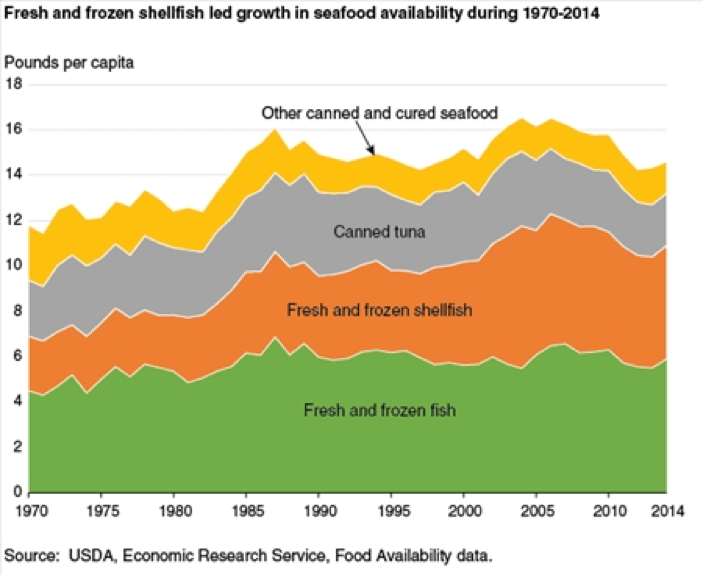
However, despite this steady increase, U.S. consumers are only consuming about 25% of the dietary recommendations for seafood. It’s not difficult to opine why and the list is long.
Possible Reasons for Low Seafood Consumption:
- Unfamiliarity with preparation methods
- Higher retail prices
- Lack of awareness of health benefits
- Concerns about food safety
- Lack of clear labeling
- Location at rear of store
- Small cases with limited assortment
- No merchandising and/or education information
- Lack of value added products
What categories like deli, bakery and produce have solved over the years with the advancement of new products (ready to use guacamole), new education (mango board education) and contemporary trends (kale chip kits), have driven not only new sales, but consumption. The produce industry has successfully made fruit and vegetables cool and that has meant more dollars in the pocket of producers and retails. And if you aren’t sure produce is cool, think again because chances are you had not heard of avocado toast a year ago.
So now is the time – the season is right, for the fish and seafood industry to step up and take advantage of key food trends that make consumers ready to dive in.
- Health is a continually growing priority. Consumers want foods that naturally provide the vitamins and minerals their body needs – they want food to be the prescription and they want to do it naturally without all kinds of preservatives.
- Food influencers wield real power. Online bloggers and the power of social media now make it possible to take information to the masses. Providing education and outreach campaigns are easier than ever.
- Consumers believe fresh is better. The perimeter store is winning hearts and dollars and filling carts. The time is right to rethink in-store merchandising.
- New technology is making value added possible. It’s time to look to R&D for more value added convenience options that help consumers with their basic prep and cook challenges to get fresh, healthy protein on the table.
- A global consumer is ready for global flavors. In fact, a recent survey by Dataessentials found that 53% of consumers want to try new global seafood dishes.
- Sustainability is a high focus priority. Today’s consumer wants to know where their food comes from, making the time right to promote more locally sourced fish that often does not have a commercial market. These previously deemed “trash fish” can be more sustainable and more affordable with less negative perception from consumers.
I encourage the seafood industry to look at today’s new consumer and create the tools and resources that will make them lifelong seafood fans.
If you’re ready for more marketing insights to grow your brand contact FullTilt at Melinda@fulltiltmarketing.net