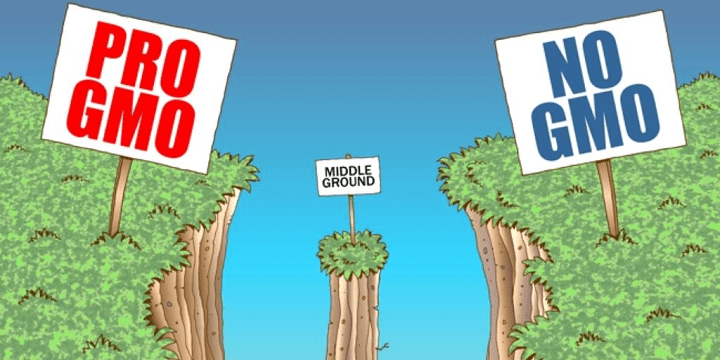
There is a tendency for most of us not to trust what we don’t understand. And genetically modified organisms known as GMOs can be very confusing. On one side of the spectrum, the Food and Drug Administration has said that GMOs are safe for consumption and it’s estimated that GMOs are in the majority of our food supply (between 75% – 80%). On the other side, consumer groups argue that GMOs cause health issues and are bad for the environment.
The scientific procedure of gene splicing and modifying the genetic makeup of a living organism requires sophisticated technological expertise in which most of us have no training and very little comprehensive knowledge besides what the internet tells us.
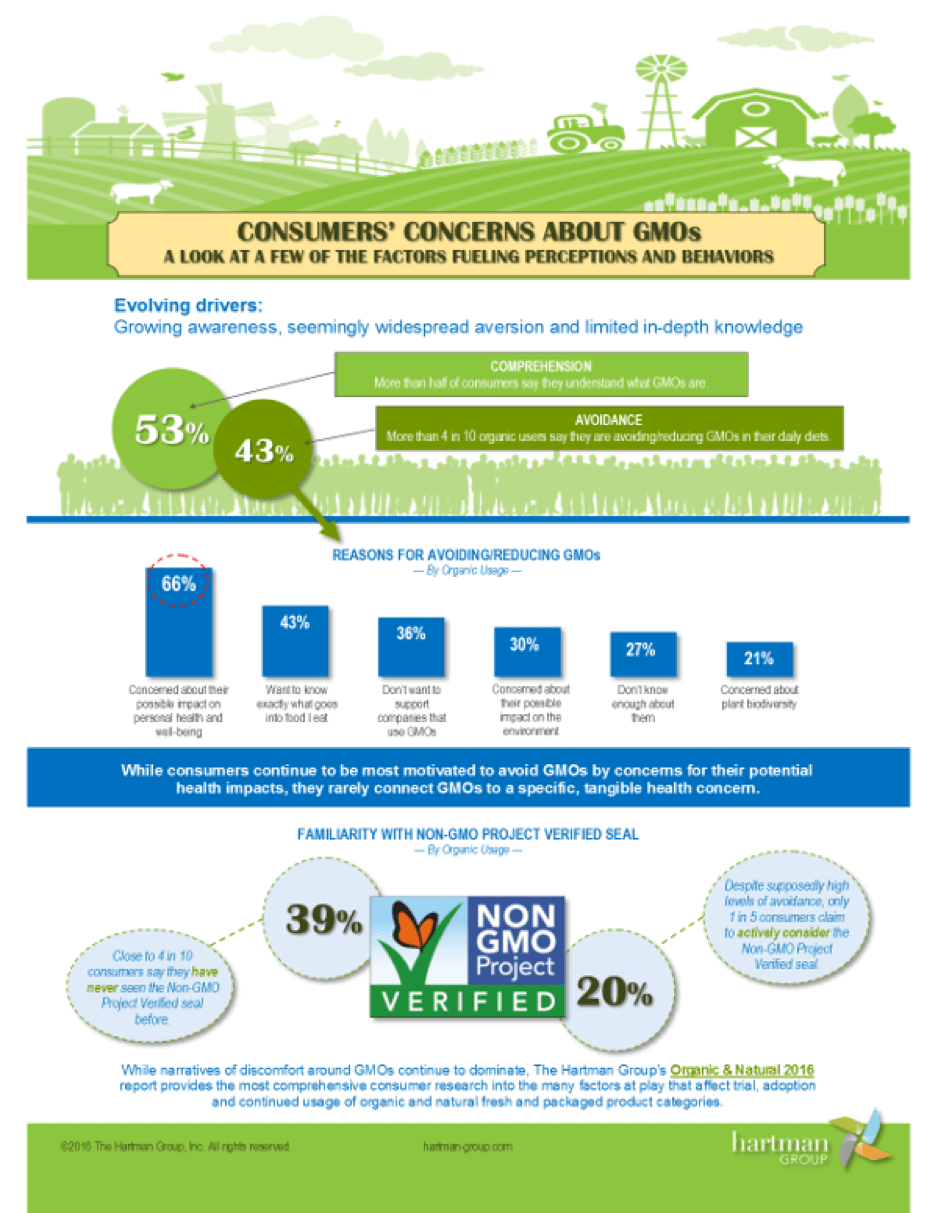
Yet, according to a recent study from the Hartman Group, more than half (53%) of consumers state they know what GMOs are and 43% state they are avoiding or reducing them in their daily diet. But this makes me wonder…
In my professional experience with research surveys and analytics, consumers tend to not want to appear uneducated or quite frankly dumb when posed specific questions so they may answer “yes” when they are really unsure. According to the Hartman Group, while consumers continue to be most motivated to avoid GMOs over concerns about the potential health impact, they rarely connect GMOs to a specific health concern.
Whether or not consumers have a good understanding of GMOs or not, the bottom line is that shoppers are becoming more concerned about how and where their food is grown which has spurred an increased interest in locally grown and organics. Driven by the younger, millennial generation, most consumers argue that, safe or not, they have the right to know exactly what is in their food.
This right to know movement has received much traction. After years of bitter debates in Congress, President Obama signed the GMO Labeling Bill this past August. Shoppers will be able to find out whether any food in the supermarket contains GMO ingredients. But they won’t necessarily see that information on the package. Instead, they may have to scan a “QR code” or call an 800 number to find out.
This increased consumer interest and “need to know” makes it important for produce/food companies to be more transparent, providing key information about GMOs to educate and inform the public.
The use of social networks can be a valuable tool for this effort. There’s the old saying that perception becomes reality whether it’s true or not. When it comes to really understanding GMOs, sharing knowledge is the best solution. Look for our follow-up article on this issue that will provide insights and recommendations for consumer communications.