
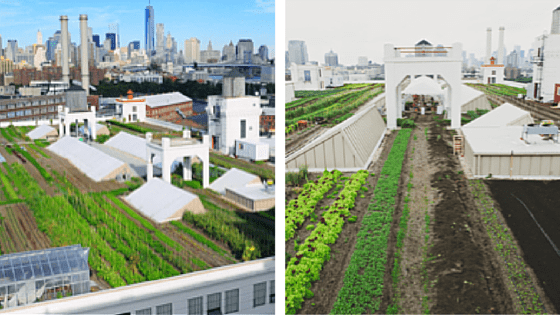
Over the past few years, the trend in purchasing local and/or organic products has grown exponentially, and has no signs of slowing down. The problem for many regions and cities throughout the US is operational and the physical ability for local farms to provide products year round; which is why many operations are starting to look at other creative methods these days.
Urban Organics, located in St. Paul, Minnesota, converted fives stories of an abandoned warehouse into an aquaponics farm (a process that grows vegetables on top of fish tanks) that has been able to supply, year round, organic items like kale, chard, herbs, and yes, even the fish, for a regional retailer.
Another successful example of this is Brooklyn Grange; an organization in Brooklyn, NY that has created the world’s largest rooftop garden and is the leading rooftop farming and intensive green roofing business in the US. Brooklyn Grange now operates 3 rooftop gardens within the city that produce over 50,000 pounds of organically cultivated produce each year that they sell to the local community. They now also operate the city’s largest bee yard (also located on a rooftop).
The road bump though that comes with products grown using these techniques is the marketability of them—if you remove the image of the traditional farm that normally accompanies local products, will consumers still view them as “natural” or more as manufactured products?
By simply explaining these different farming methods and being transparent about them, and sharing your story behind the “who” and “why” of the operation, we can help consumers connect instead with the people behind the produce and help them realize that farming is farming, whether on a roof or in a field.
More importantly is educating consumers that in large urban settings or cold-weather regions, providing fresh local produce from farms is sometimes impossible, and that creative efforts, such as aquaponic farms and rooftop gardens, are helping to bridge this gap.
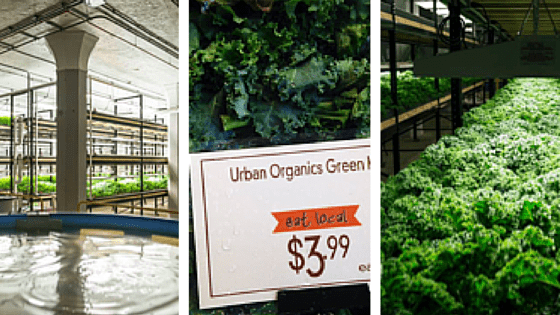
Unknown to many Minnesotans, despite the large farming community within the state, 85% of their produce is from hundreds, and even thousands of miles away, even during the summer growing months. Urban Organics, along with Garden Fresh Farms (another aquaponics operation in Minnesota), are looking to change this statistic, as well as create a model that will be successful and sustainable, and can be carried out in other large cities, or cold-weather regions.
These types of “farms” can also help link consumers back into food production and help them understand the processes and work that goes into producing food; something that so many consumers have been alienated from, and are now demanding to know. Citizens of large urban settings may rarely have the chance to see a real-life farm; creating new farm settings within these areas will give them a chance to understand cultivation, harvesting and growing seasons, even if they are standing 7 stories above the street, and not in a field.
Have another example of creative farming techniques that you’ve seen and want to share? Have products that are grown using these techniques and not sure how to effectively share your story? Drop us a line, we’d love to hear from you.
Written by Alison Eiler
Marketing Coordinator
Alison@FullTiltMarketing.net
