
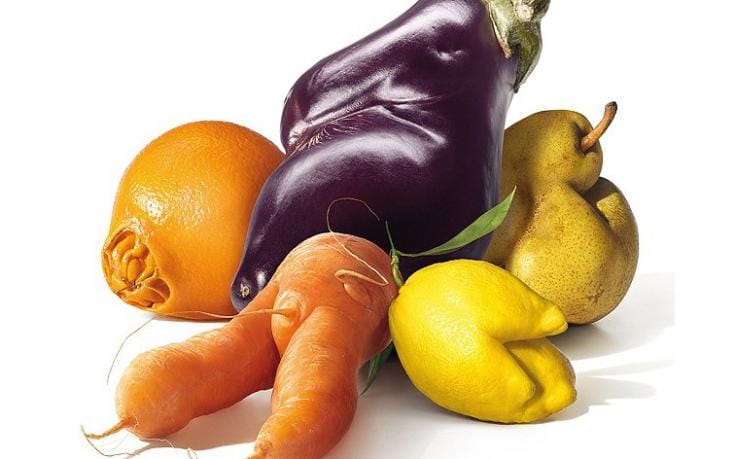
Remember that picture of the perfect fruit bowl? You’ve seen it, right? Shiny, vibrant colors, elegantly shaped, perfect… When was the last time you saw two apples that looked exactly the same? We’re thinking it’s almost never. But we continually buy into the idea that a food needs to be a certain shape and color to be of a certain quality, and expect to find this when shopping for produce.
Because of this, 30% of produce in the U.S. is either thrown out or rejected simply because of its odd or ugly shape each year. Retailers know that they cannot sell misshapen fruits and vegetables and simply reject them before they can even reach the sales floor.
Combine this high percentage of food waste due to cosmetic reasons with the increasing number of people affected everyday by hunger, and we are not headed in the right direction. And with recent projections estimating that more than 9 billion people will be affected by hunger worldwide by the year 2050, something needs to change.
And a French based supermarket is doing just that. Intermache has launched the “Inglorious Fruits and Vegetables” campaign to highlight the issue of food waste, and find a place for ugly produce. The campaign has been so successful so far that they have had issues keeping product on shelf. By offering the produce at 30% less than the price of “normal” produce, it has allowed families with financial difficulties to still have access to enough fresh produce for their family to reach the recommended 5 servings a day.
Baloian Farms, a California-based produce grower, has also been taking a stand against the food waste trend with an innovative value-added product. The product, Oddbells, was released in the summer of 2012, and features three imperfect bell peppers packaged together sold at a cheaper price than normal bulk peppers. By packaging these bulk items together, consumers are less likely to grade the peppers due to cosmetic reasons preventing in-store waste that happens when consumers grade individual bulk items for cosmetic issues.
Changing our mindset about how we present and market “ugly” foods to consumers can not only help reduce the shear amount of perfectly good food that is wasted due to cosmetic flaws, but can also help us tackle the ever-growing world hunger issue.
Have some “not-so-perfect” looking foods you’re not sure what to do with? Drop us an email or give us a call and we can help.
Written by Kristin Ziegelbauer
Marketing Assistant
